The Scenic Route Through California Wine Country: The Upper Central Coast
Our next stop on the West Coast 101 road trip takes us north to California’s Upper Central Coast, a region where rugged mountain vineyards, historic wineries, and generations of pioneering growers have helped shape some of the state’s most distinctive wines.
Napa Valley and Sonoma often command much of the attention. However, the Upper Central Coast offers a different perspective on California wine. Here, steep hillsides and cooling Pacific influences shape remarkable vineyard sites. As a result, producers craft wines with character, structure, and a strong sense of place. From the Santa Cruz Mountains to the vineyards overlooking Monterey Bay, this is a region that rewards exploration.
“I’ve always loved a good road trip, and being relatively new to California, this series has been one of my favorite ways to explore and learn about the state’s incredibly diverse wine regions. Every stop reveals a different landscape, climate, and story. Exploring the Upper Central Coast has shown me that some of California’s most exciting wines lie beyond the regions everyone already knows.”
Dani Nutt, Assistant Manager of Marketing at Benchmark Wine Group
A Region Defined by Elevation and Ocean Influence
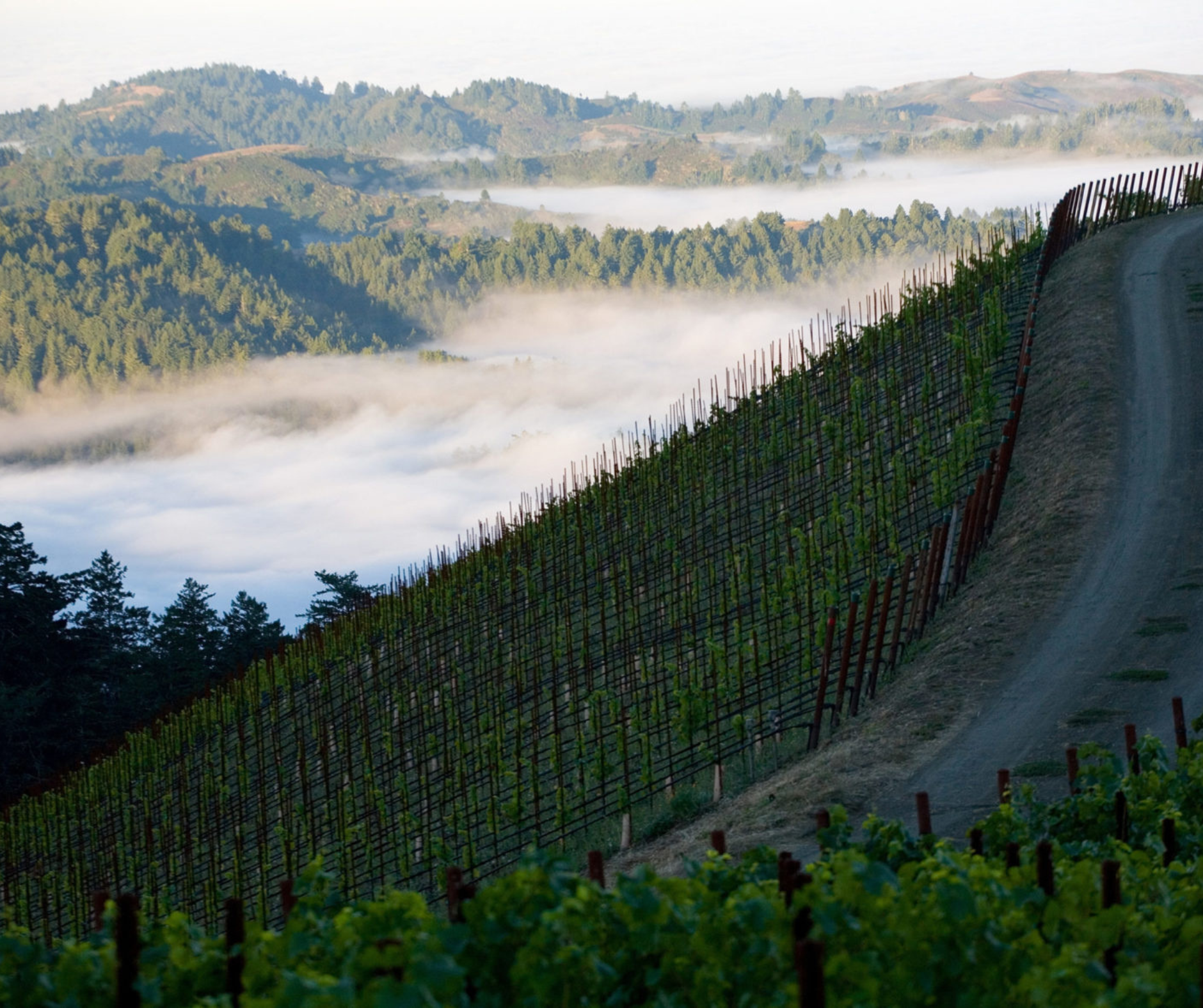
The Upper Central Coast stretches along California’s rugged coastline, where mountains rise above the Pacific and vineyards are shaped by both elevation and maritime influence.
Unlike many wine regions, much of the Upper Central Coast feels the direct effects of cool marine air and coastal fog. The region also experiences significant day-to-night temperature swings. These conditions slow ripening, extend the growing season, and help preserve freshness and balance in the wines.
The result is a region capable of producing wines that combine California fruit character with remarkable structure and energy.
A History of Pioneering Viticulture
Winegrowing in this part of California dates back generations, but many of the region’s most important developments occurred during the latter half of the twentieth century.
As California’s wine industry expanded, a number of forward-thinking growers began looking beyond the state’s established regions. They recognized the potential of mountain vineyards, coastal valleys, and cooler growing sites. Many considered these locations too challenging for premium wine production.
Their willingness to experiment helped establish the Upper Central Coast as one of California’s most exciting winegrowing areas. Today, collectors and critics rank many of those early vineyard sites among the most respected in the state.
The Santa Cruz Mountains
Few regions capture the spirit of the Upper Central Coast quite like the Santa Cruz Mountains.
Growers often plant vineyards on steep slopes above the fog line. There, elevation, sunlight, and cooling ocean influences create ideal growing conditions. The challenging terrain naturally limits yields. As a result, the wines often show concentration, complexity, and longevity.
Among the region’s most influential producers is Ridge Vineyards, whose legendary Monte Bello has helped define mountain-grown Cabernet Sauvignon for generations. Meanwhile, Rhys Vineyards has helped elevate the reputation of Santa Cruz Mountains Pinot Noir and Chardonnay. Its site-driven vineyard bottlings have earned a loyal following among collectors. More recently, Arnot-Roberts has showcased the region’s vineyard diversity with a minimalist approach that allows each site to speak for itself.
Together, these producers have helped establish the Santa Cruz Mountains as one of California’s most respected regions for Chardonnay, Pinot Noir, and Cabernet Sauvignon.
Beyond the Mountains: Historic Vineyards and New Perspectives
Part of what makes the Upper Central Coast so fascinating is the diversity of voices shaping California wine today.
Some producers focus on preserving the state’s viticultural history. For example, Bedrock Wine Company has built its reputation around safeguarding historic old-vine vineyards. In doing so, it connects modern collectors with some of California’s oldest planting sites.
Others continue to push boundaries. For example, Keplinger has earned a devoted following for powerful Rhône-inspired wines sourced from exceptional vineyard sites throughout California. Meanwhile, Fingers Crossed represents a newer generation of winemakers. Their small-production wines reflect both site and creativity.
Together, these producers demonstrate the balance between tradition and innovation that continues to define California wine.
Monterey County and Monterey Bay
Further south, Monterey County showcases the powerful influence of Monterey Bay.
Monterey is one of California’s largest and most important winegrowing regions. Cool ocean breezes shape its long growing season and funnel inland throughout the day. As a result, grapes ripen gradually while maintaining freshness and acidity.
Chardonnay and Pinot Noir have become signature varieties throughout the region, though Syrah, Cabernet Sauvignon, and a range of other grapes also thrive in Monterey’s diverse vineyard sites.
The combination of sunshine, cool temperatures, and varied soils has helped establish Monterey County as one of California’s most reliable sources of high-quality coastal wines.
A Region Worth Discovering
Ultimately, what makes the Upper Central Coast so compelling is its diversity. Historic mountain vineyards, windswept coastal sites, and pioneering producers define the region. At the same time, the Upper Central Coast remains deeply connected to its roots.
For example, the region offers everything from the iconic Monte Bello bottlings of Ridge Vineyards to the vineyard-designate wines of Rhys. Collectors can also explore the site-focused approach of Arnot-Roberts, the preservation of historic vineyards by Bedrock, and the modern expressions crafted by Keplinger and Fingers Crossed.
Additionally, these wines offer collectors an opportunity to explore a different side of California. For wine lovers, they provide a fascinating look at how climate, elevation, and geography can shape a wine’s character. For anyone willing to venture beyond the familiar, the Upper Central Coast offers countless discoveries. Many of California’s most rewarding wines are found just off the beaten path.
Explore the Upper Central Coast Collection
From mountain-grown Cabernet Sauvignon and coastal Chardonnay to site-driven Pinot Noir and Rhône-inspired blends, our latest collection highlights the producers and wines that continue to define this remarkable corner of California wine country.
Cheers,
The BWG team
Leave a Reply