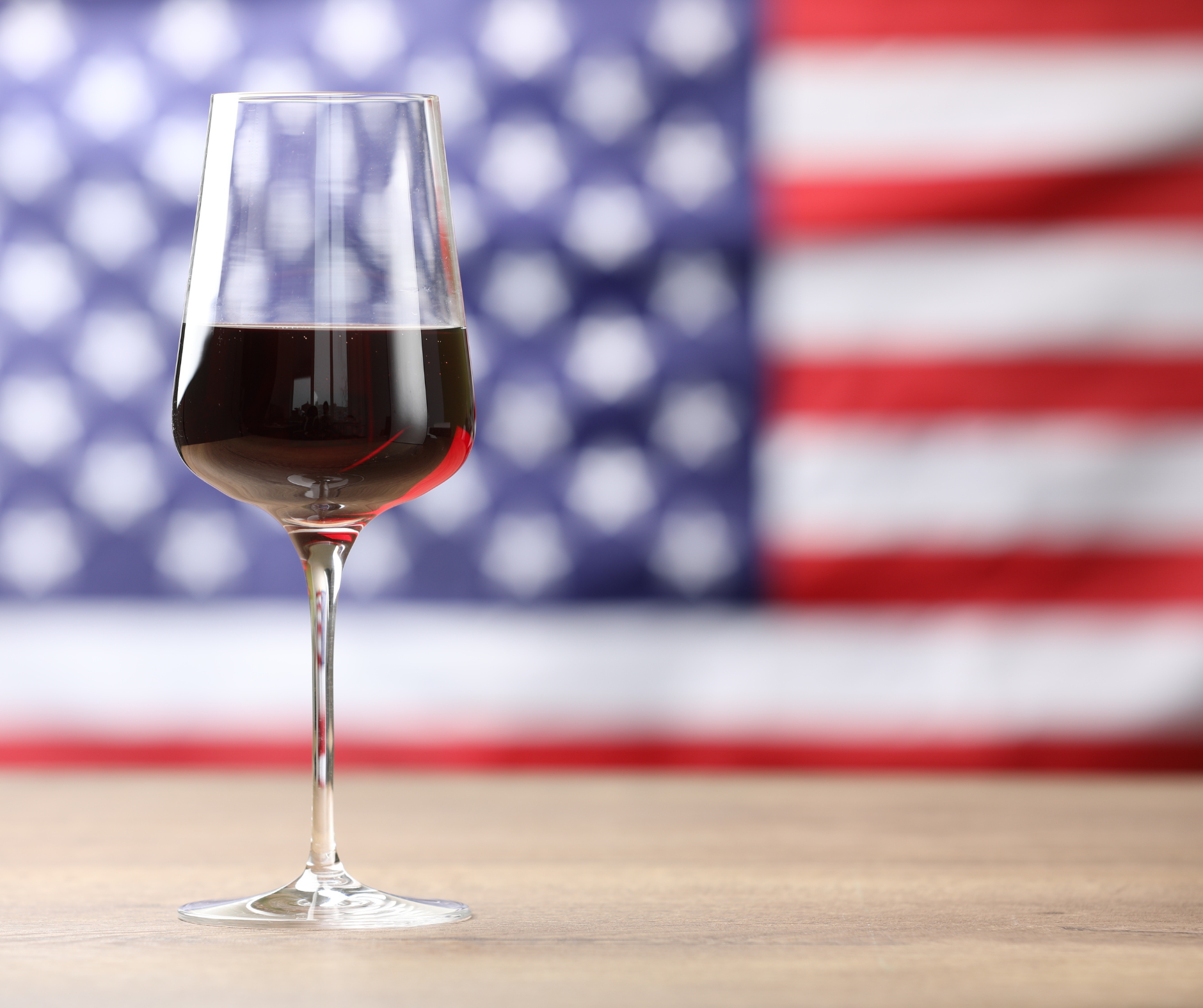
From America’s First Toast to World-Class Cabernet
America’s 250th anniversary is the perfect time to look back at the remarkable story of American wine history. Over the past two and a half centuries, wine in the United States has evolved from imported bottles enjoyed by the Founding Fathers to some of the world’s most collectible Cabernet Sauvignon, Chardonnay, and Pinot Noir.
The story of American wine history begins with Madeira, the fortified wine that accompanied the birth of a nation. It continues through Prohibition, the rise of Napa Valley, and the famous Judgment of Paris in 1976, before arriving at today’s world of cult California wineries and internationally acclaimed American producers.
Whether you’re a history enthusiast or a serious collector, understanding American wine history offers a fascinating perspective on how the United States became one of the world’s great wine-producing nations.
What Was America’s First Celebratory Wine?
Long before Napa Valley became famous, the wine most closely associated with America was Madeira.
Madeira is a fortified wine produced on the Portuguese island of the same name. Thanks to its unique production process, it was remarkably stable during long sea voyages across the Atlantic. While many European wines spoiled before reaching America, Madeira arrived in excellent condition, making it one of the colonies’ most popular imports.
Many of the Founding Fathers, including George Washington, Thomas Jefferson, Benjamin Franklin, and John Hancock, were known admirers of Madeira. According to historical tradition, Madeira was even used to toast the signing of the Declaration of Independence in 1776.
For early Americans, wine represented more than celebration. It symbolized diplomacy, hospitality, and prosperity during the nation’s earliest years.
Early American Wine History
Although wine was widely enjoyed, producing exceptional American wine proved far more difficult.
Early vineyards were planted throughout the colonies, but European grape varieties struggled in unfamiliar climates. During the nineteenth century, European immigrants brought generations of winemaking knowledge to California, introducing classic grape varieties and modern vineyard practices.
However, progress was anything but smooth.
Several major events shaped American wine history:
- European immigrants established California vineyards.
- Phylloxera devastated vineyards in the late 1800s.
- Prohibition nearly destroyed the American wine industry.
- Following World War II, quality-focused wineries began to emerge.
- Napa Valley slowly developed an international reputation.
Each milestone helped lay the foundation for the modern American wine industry.
How the Judgment of Paris Changed American Wine History
No single event transformed American wine history more than the Judgment of Paris.
Held in 1976 during America’s Bicentennial celebrations, the blind tasting was organized by British wine merchant Steven Spurrier. The event invited leading French wine experts to compare California wines against some of France’s most prestigious producers.
The results shocked the wine world.
The 1973 Château Montelena Chardonnay finished ahead of several renowned white Burgundies. Meanwhile, the 1973 Stag’s Leap Wine Cellars Cabernet Sauvignon outperformed some of Bordeaux’s most celebrated First Growth estates.
Almost overnight, perceptions changed.
For decades, French wines had been considered the unquestioned standard of excellence. The Judgment of Paris demonstrated that California wineries could compete at the very highest level, permanently changing the course of American wine history.
Even fifty years later, the tasting remains one of the most influential events in the modern wine world.
The Wineries That Defined Modern American Wine History
Following the Judgment of Paris, American wineries continued pushing the boundaries of quality.
Napa Valley quickly established itself as one of the world’s premier regions for Cabernet Sauvignon, while other regions demonstrated that American wine could excel across many different grape varieties.
Several producers have become synonymous with modern American wine history.
Château Montelena
Forever linked to the Judgment of Paris, Château Montelena remains one of California’s most historic wineries.
Stag’s Leap Wine Cellars
Its victory in Paris helped redefine global perceptions of American Cabernet Sauvignon.
Harlan Estate
Often compared with the world’s greatest Bordeaux estates, Harlan Estate has become one of Napa Valley’s most collectible wines.
Screaming Eagle
Few American wines command as much attention among collectors as Screaming Eagle, whose limited production and remarkable critical acclaim have made it one of the world’s most sought-after wines.
Opus One
Founded as a partnership between Robert Mondavi and Château Mouton Rothschild, Opus One symbolizes the collaboration between Old World tradition and New World innovation.
Together, these producers helped establish American fine wine on the global stage.
American Wine Regions Every Collector Should Know
Today’s collectors recognize that great American wine extends far beyond Napa Valley.
Napa Valley
The world’s leading destination for collectible Cabernet Sauvignon.
Sonoma County
Known for exceptional Chardonnay, Pinot Noir, Cabernet Sauvignon, and Rhône varieties.
Willamette Valley
Oregon has earned international recognition for elegant Pinot Noir and increasingly impressive Chardonnay.
Washington State
Washington continues producing outstanding Cabernet Sauvignon, Merlot, Syrah, and Bordeaux-style blends.
Santa Barbara County
One of California’s most exciting regions for Pinot Noir, Chardonnay, and cool-climate Syrah.
Together, these regions demonstrate the remarkable diversity of modern American wine.
American Wine History Timeline
| Year | Milestone |
|---|---|
| 1776 | Madeira is associated with celebrations surrounding American independence. |
| 1800s | European immigrants expand California viticulture. |
| Late 1800s | Phylloxera reshapes vineyards across California. |
| 1920 | Prohibition begins. |
| 1933 | Prohibition ends and the wine industry begins rebuilding. |
| 1976 | Judgment of Paris transforms American wine history. |
| 1980s-1990s | Napa Valley cult wineries emerge. |
| 2026 | America celebrates its 250th anniversary. |
What Does the Future Hold for American Wine?
The next chapter of American wine history is already underway.
Many wineries are embracing regenerative farming, sustainable vineyard practices, precision viticulture, and innovative winemaking techniques. Younger generations are exploring emerging regions while continuing to refine the styles that have made American wines internationally respected.
Collectors can also expect continued growth in mountain vineyards, single-vineyard bottlings, and wines that express individual vineyard sites with greater precision.
As American wine continues to evolve, its future looks just as exciting as its past.Celebrating 250 Years of American Wine History
As America marks its 250th anniversary, there is no better time to reflect on the extraordinary journey of American wine history.
From the Madeira enjoyed by the Founding Fathers to the historic triumph of the Judgment of Paris and the rise of iconic producers such as Château Montelena, Stag’s Leap Wine Cellars, Harlan Estate, Screaming Eagle, and Opus One, American wine has earned its place among the world’s finest.
For collectors, these wines represent more than exceptional bottles. They tell the story of innovation, perseverance, and craftsmanship that has defined American wine history for more than two centuries.
Whether you’re opening a mature Napa Valley Cabernet, an elegant Oregon Pinot Noir, or discovering a new American producer, every bottle offers the opportunity to celebrate a remarkable chapter in wine history.
Cheers,
The BWG team
Leave a Reply