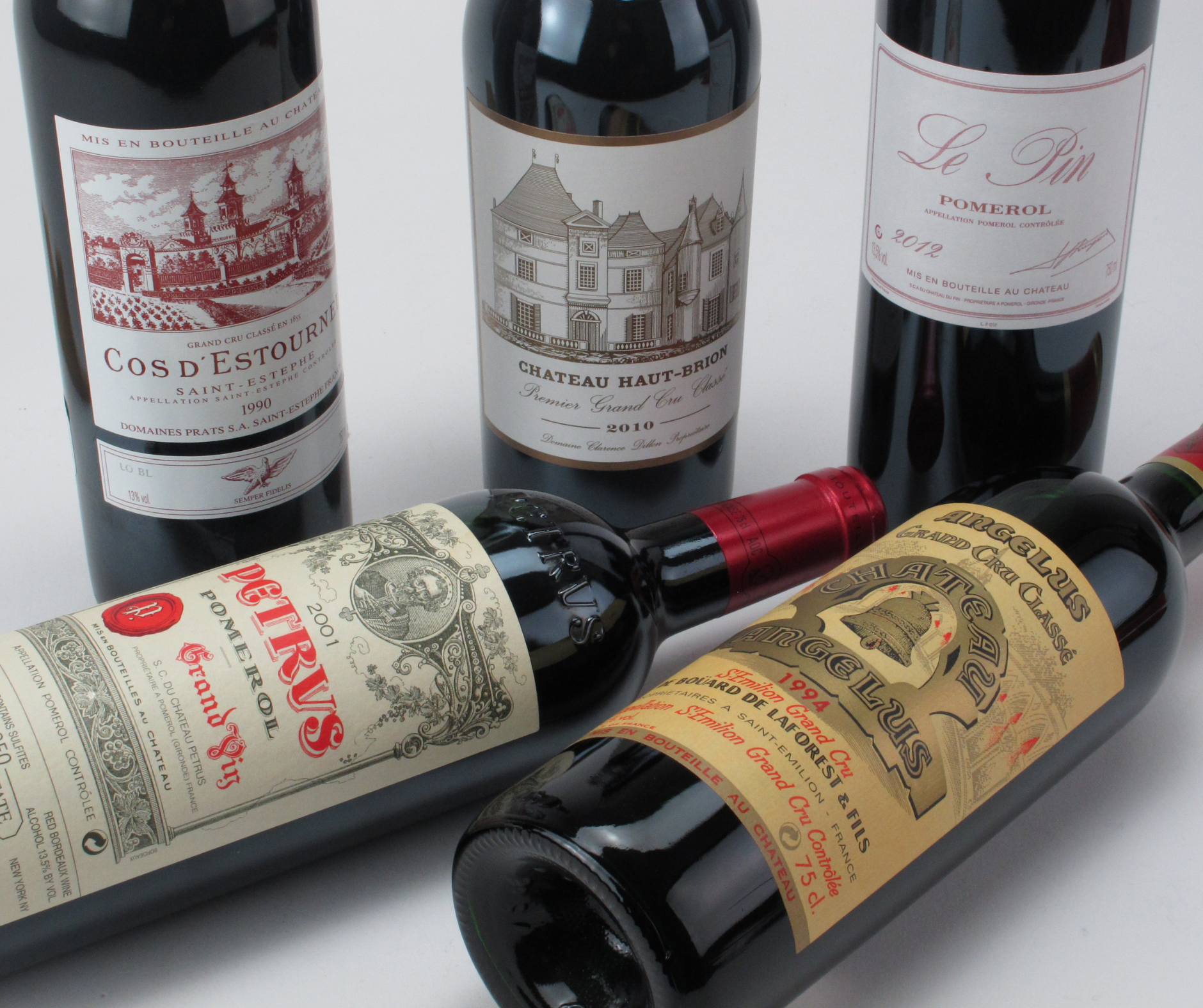
A Collector’s Guide to Bordeaux Wine Classifications
When shopping for Bordeaux wine, terms such as First Growth, Grand Cru Classé, Saint-Émilion Grand Cru, and Cru Bourgeois can make the label feel more complicated than the wine itself.
Unlike Burgundy, Bordeaux does not follow one universal hierarchy. The region has several classification systems, each applying to a particular area and operating according to its own rules. Most rank the château or estate rather than an individual vineyard.
Here is how Bordeaux’s major classifications work and what collectors should consider when choosing a bottle.
What Does “Cru” Mean in Bordeaux?
The French word cru roughly translates to “growth.” In Bordeaux, it generally refers to a wine-producing estate or château recognized within a particular classification.
This is an important distinction from Burgundy, where Grand Cru and Premier Cru usually identify individual vineyard sites. In Bordeaux, the classification is more closely tied to the estate, its historical reputation, and the wines produced under its name.
Bordeaux Classifications at a Glance
| Classification | Region | Highest Rank | Updated? |
|---|---|---|---|
| 1855 Classification | Médoc, Château Haut-Brion, Sauternes and Barsac | First Growth or Premier Cru | Essentially permanent |
| Saint-Émilion Classification | Saint-Émilion | Premier Grand Cru Classé A | Generally revised every 10 years |
| Graves Classification | Graves and Pessac-Léognan | Cru Classé | No internal ranking |
| Cru Bourgeois du Médoc | Médoc | Cru Bourgeois Exceptionnel | Periodically renewed |
| Crus Artisans | Médoc | Cru Artisan | Periodically reviewed |
The most important point is that these classifications are separate. A château’s rank only makes sense within the system and appellation to which it belongs.
What Is the Bordeaux 1855 Classification?
The most famous Bordeaux classification was created for the 1855 Paris Universal Exhibition at the request of Napoleon III. Bordeaux wine brokers ranked the leading estates largely according to their reputation and market prices at the time.
For red Bordeaux, the classification includes 60 Médoc estates and Château Haut-Brion from Graves. These properties are divided into five levels:
- Premier Cru, or First Growth
- Deuxième Cru, or Second Growth
- Troisième Cru, or Third Growth
- Quatrième Cru, or Fourth Growth
- Cinquième Cru, or Fifth Growth
The five First Growth estates recognized today are:
- Château Lafite Rothschild
- Château Latour
- Château Margaux
- Château Haut-Brion
- Château Mouton Rothschild
Mouton Rothschild was elevated from Second Growth to First Growth in 1973, making it the most significant change to the red-wine ranking.
The 1855 Classification also includes the sweet wines of Sauternes and Barsac. Château d’Yquem stands alone at the highest level as Premier Cru Supérieur, followed by estates ranked Premier Cru and Second Cru. Explore the official 1855 Classification.
Is a First Growth Always Better Than a Second Growth?
Not necessarily.
The 1855 Classification reflects historical prestige and the perceived quality of the estates in the nineteenth century. Although it remains enormously influential, it does not guarantee that every First Growth will outperform every Second, Third, Fourth, or Fifth Growth in every vintage.
Producer performance, vintage conditions, winemaking, storage, provenance, and bottle condition all influence the final experience. Certain lower-ranked estates have consistently produced wines that collectors believe perform above their official classification.
A château’s rank provides valuable historical context, but it should not be the only consideration when purchasing Bordeaux.
How Does the Saint-Émilion Classification Work?
Saint-Émilion has its own classification system, established in 1955 and generally revised every ten years. Unlike the 1855 Classification, it is designed to evolve as estates and standards change.
The hierarchy includes:
- Premier Grand Cru Classé A
- Premier Grand Cru Classé
- Grand Cru Classé
The current classification was unveiled in 2022 and includes 85 estates: two Premiers Grands Crus Classés A, 12 Premiers Grands Crus Classés, and 71 Grands Crus Classés. Learn more about the Saint-Émilion Classification.
This system evaluates more than historical reputation. Depending on the classification level, considerations include blind tastings across multiple vintages, terroir, estate management, reputation, and the wine’s ability to age.
Saint-Émilion Grand Cru vs. Grand Cru Classé
This is one of the most easily misunderstood distinctions in Bordeaux.
Saint-Émilion Grand Cru is an appellation with production requirements that are more stringent than those of the broader Saint-Émilion appellation. It is not, by itself, a château ranking.
Grand Cru Classé is a position within the official Saint-Émilion Classification. Therefore, every Saint-Émilion Grand Cru Classé belongs to the Saint-Émilion Grand Cru appellation, but not every wine labeled Saint-Émilion Grand Cru is classified as Grand Cru Classé.
The word classé is the key distinction.
What Is a Cru Classé de Graves?
The Graves Classification was established in 1953 and finalized in 1959. It recognizes estates for their red wines, white wines, or both.
Unlike the 1855 and Saint-Émilion systems, the Graves Classification does not divide its estates into numbered levels. Each recognized property is simply designated Cru Classé de Graves.
All of the classified Graves estates are now located within the Pessac-Léognan appellation. Notable examples include Château Haut-Bailly, Château La Mission Haut-Brion, Domaine de Chevalier, and Château Smith Haut Lafitte.
Château Haut-Brion holds the unusual distinction of appearing in the 1855 Classification while also being included among the classified growths of Graves.
What Does Cru Bourgeois Mean?
Cru Bourgeois is a separate classification for Médoc estates that are not included in the 1855 ranking. These wines can offer collectors an excellent way to explore Bordeaux beyond its most famous names.
The hierarchy includes:
- Cru Bourgeois
- Cru Bourgeois Supérieur
- Cru Bourgeois Exceptionnel
The classification considers wine quality as well as aspects of vineyard management, environmental practices, consistency, and estate standards.
Cru Bourgeois should not be interpreted as a direct “sixth level” beneath the Fifth Growths. It is an independent classification with its own criteria.
Why Are Pomerol’s Famous Estates Unclassified?
Pomerol has no formal classification system.
This means estates such as Château Pétrus, Château Le Pin, Château Lafleur, and Vieux Château Certan do not carry an official First Growth or Grand Cru Classé designation. Their reputations have instead been established through quality, scarcity, critical recognition, and collector demand.
It is one of the clearest examples of why an absence of classification does not indicate an absence of quality.
Which Bordeaux Classification Should Collectors Buy?
There is no single classification that determines which Bordeaux belongs in a collection.
First Growths offer historical prestige, rarity, and proven longevity. Other classified growths can provide exceptional quality and the opportunity to explore individual appellations and vintages more deeply. Cru Bourgeois estates may offer compelling introductions to the Médoc, while the unclassified wines of Pomerol include some of Bordeaux’s most celebrated bottles.
Collectors should consider:
- The château and its performance in a particular vintage
- Appellation and regional style
- Drinking window and cellar potential
- Provenance and storage history
- Bottle condition and format
- Personal taste
Classification is an excellent starting point, but Bordeaux rewards those who look beyond the rank.
The Final Word
Bordeaux does not have one simple ladder from good to best. Its classifications are a collection of distinct systems shaped by geography and history.
The 1855 Classification ranks estates from First through Fifth Growth. Saint-Émilion maintains a separate and periodically revised hierarchy. Graves recognizes classified estates without ranking them against one another, while Cru Bourgeois highlights another important group of Médoc properties. Pomerol, meanwhile, proves that a wine needs no formal classification to become a global icon.
For collectors, understanding these distinctions makes it easier to read a Bordeaux label, compare estates, and recognize where history ends and the quality inside the bottle begins.
Cheers,
The BWG team
Looking to understand Burgundy’s vineyard hierarchy? Explore how Grand Cru and Premier Cru differ in our complete Burgundy guide.
Frequently Asked Questions
It depends on the region. Premier Cru, or First Growth, is the highest rank for red wines in the 1855 Classification. In Saint-Émilion, Premier Grand Cru Classé A is the highest distinction.
Not necessarily. The meaning of Grand Cru changes according to the appellation. Saint-Émilion Grand Cru is an appellation, while Grand Cru Classé is an official estate classification.
There are five First Growth red-wine estates in the 1855 Classification: Lafite Rothschild, Latour, Margaux, Haut-Brion, and Mouton Rothschild.
No. Château Pétrus is located in Pomerol, which has no official classification. Its prestige comes from the wine’s quality, history, rarity, and international reputation.
Yes. Classification can indicate historical standing or consistent achievement, but it does not guarantee the quality of every vintage or bottle. Producer performance, vintage, provenance, and storage remain essential.
Leave a Reply