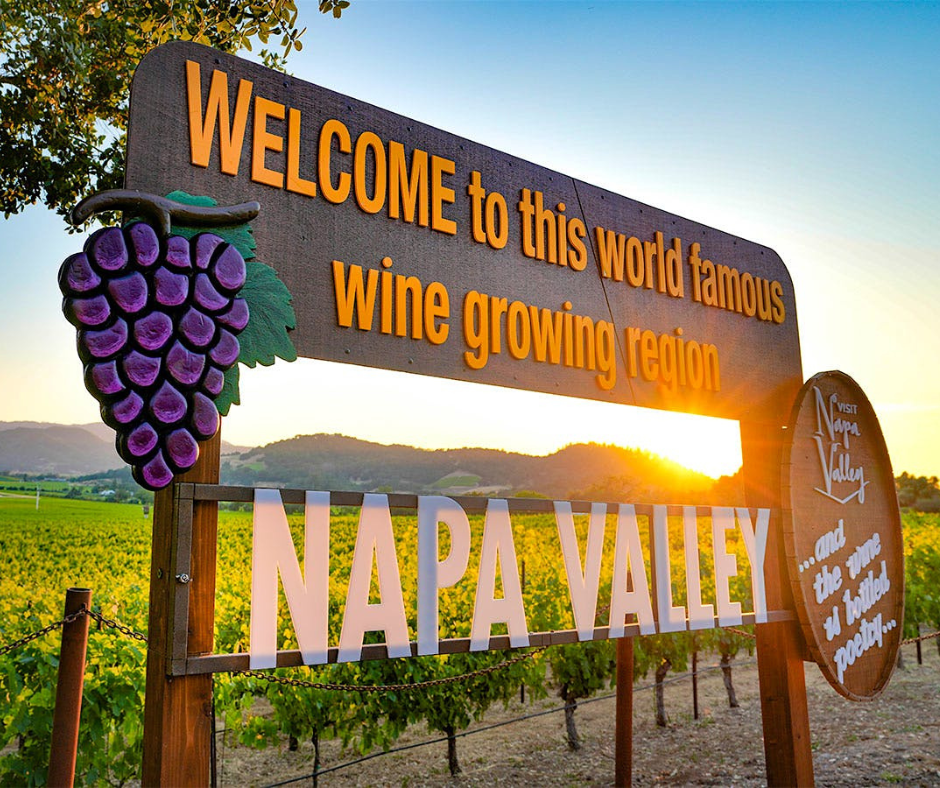
Napa Valley AVAs Explained from Calistoga to Coombsville
Napa Valley AVAs reveal how dramatically wine can change within a relatively small region. From the warmth of Calistoga to the cooler vineyards of Coombsville, each appellation has its own combination of climate, soil, elevation, and exposure.
These differences are especially clear along Napa Valley’s central corridor. Moving from north to south, temperatures generally become cooler as the influence of San Pablo Bay grows stronger. The surrounding Mayacamas and Vaca Mountains also deposit different soils across the valley floor and adjoining benchlands.
As a fine and rare wine merchant based in Napa Valley, Benchmark Wine Group encounters these distinctions through bottles spanning producers, vintages, and appellations. Mature wines from private cellars offer an especially revealing look at how each region develops over time.
Part one of our Napa Valley AVAs series explores eight of the region’s most recognized appellations: Calistoga, St. Helena, Rutherford, Oakville, Yountville, Stags Leap District, Oak Knoll District, and Coombsville.
How Can AVA Knowledge Help When Choosing Napa Wine?
Understanding Napa Valley AVAs can help wine lovers identify the styles they enjoy and make more informed buying decisions.
Those who prefer ripe, concentrated Cabernet Sauvignon may explore Calistoga or St. Helena. Rutherford and Oakville appeal to drinkers seeking structure, depth, and long-term aging potential. Stags Leap District often suits those who value a more polished texture, while Coombsville and Oak Knoll can offer greater freshness.
AVA knowledge also makes comparative tasting more rewarding. Opening wines from several appellations in the same vintage reveals how geography affects ripeness, tannin, aroma, and acidity.
This perspective plays an important role in our work at Benchmark Wine Group. By acquiring private wine collections, we regularly see Napa Valley wines across decades of vintages. These bottles demonstrate how appellation, producer, vintage, and storage history work together as a wine matures.
For collectors, provenance remains essential. Every bottle offered by Benchmark Wine Group is backed by the BWG Provenance Guarantee, giving collectors confidence when exploring both mature Napa Valley wines and more recent releases.
What Is a Napa Valley AVA?
An American Viticultural Area, or AVA, is a legally defined grape-growing region recognized by the Alcohol and Tobacco Tax and Trade Bureau. Each AVA must possess geographical or climatic characteristics that distinguish it from the surrounding area.
An AVA identifies where the grapes were grown. It does not regulate permitted grape varieties, vineyard yields, farming practices, or winemaking techniques. When an AVA appears on a wine label, at least 85% of the grapes must come from that region.
Napa Valley became an official AVA in 1981. It was California’s first recognized AVA and only the second established in the United States. The broader Napa Valley AVA now contains 17 officially recognized nested appellations.
Why Do Napa Valley AVAs Produce Different Wines?
Napa Valley stretches approximately 30 miles from north to south. The Mayacamas Mountains form its western boundary, while the Vaca Mountains rise to the east.
Cool air and fog enter through San Pablo Bay at the valley’s southern end. Their influence gradually weakens farther north, creating warmer conditions near St. Helena and Calistoga.
Soils add another layer of variation. Napa Valley contains volcanic material, marine deposits, gravelly alluvial fans, and deeper valley-floor soils. Even neighboring vineyards may have different drainage, sun exposure, and soil composition.
These conditions affect how grapes ripen, how much acidity they retain, and how tannins develop. They also help explain why Cabernet Sauvignon from Oakville can taste different from Cabernet grown in Rutherford or Coombsville.
Calistoga AVA
Calistoga occupies the northern end of Napa Valley and experiences some of the region’s warmest daytime temperatures. Cool nighttime air creates a substantial temperature shift, helping the grapes retain acidity after warm, sunny days.
The AVA contains diverse soils of largely volcanic origin. Rocky hillside soils meet gravelly and cobbly loams deposited across alluvial fans.
Cabernet Sauvignon grown in Calistoga often produces generous wines with ripe dark fruit and substantial concentration. Zinfandel, Petite Sirah, and Syrah also benefit from the abundant warmth.
While Calistoga wines can be powerful, the nighttime temperature drop helps preserve the balance needed for freshness and aging.
St. Helena AVA
St. Helena lies directly south of Calistoga in one of Napa Valley’s narrower sections. The AVA enjoys consistent warmth and receives less cooling influence from San Pablo Bay than appellations farther south.
Its soils include gravelly alluvial deposits, clay, and volcanic material. Conditions can vary between the valley floor, western benchlands, and vineyards approaching the Vaca Mountains.
Cabernet Sauvignon from St. Helena commonly offers ripe fruit, depth, and a broad texture. The AVA also has a meaningful history with Zinfandel, Sauvignon Blanc, and other varieties.
The region’s reliable warmth allows Cabernet Sauvignon to ripen fully, producing wines that can feel generous in youth while retaining enough structure to develop in the cellar.
Rutherford AVA
Rutherford sits near the geographic center of Napa Valley. Alluvial fans extend from both mountain ranges, creating gravelly soils with strong drainage.
Cabernet Sauvignon defines the region. Rutherford wines often combine ripe dark fruit with savory complexity, firm structure, and fine-grained tannins.
The expression “Rutherford dust” has long been used to describe a distinctive quality associated with the appellation. It does not refer to literal dust in the wine. Instead, it describes an earthy, cocoa-like, or mineral character found in many Rutherford Cabernets.
Rutherford’s combination of warmth, sunlight, and well-drained soils produces Cabernet Sauvignon with both concentration and refinement. The strongest examples can develop considerable complexity with age.
Oakville AVA
Oakville lies directly south of Rutherford and contains some of Napa Valley’s most celebrated vineyards. Warm days encourage even ripening, while evening air moving north from San Pablo Bay helps moderate temperatures.
The western side of Oakville contains gravelly alluvial soils deposited by the Mayacamas Mountains. Eastern vineyards tend to have heavier soils with a stronger volcanic influence.
These differences can create several expressions within one AVA. Western Oakville Cabernet Sauvignon may show perfume, dark fruit, and polished tannins. Wines from eastern sites can offer greater power, mineral character, and savory intensity.
Oakville also contains To Kalon, one of Napa Valley’s most historically important vineyards. Its gravelly benchland has supplied fruit for many celebrated Cabernet Sauvignon wines. Explore the site in our feature on To Kalon Vineyard and its most collectible wines.
Yountville AVA
Yountville sits south of Oakville and experiences a stronger cooling influence from San Pablo Bay. Morning fog and afternoon breezes create a moderate climate and a long growing season.
The AVA contains gravelly, silty, and clay-based soils. These varied conditions support Cabernet Sauvignon, Merlot, Sauvignon Blanc, and several other varieties.
Cabernet Sauvignon from Yountville can offer ripe fruit without the same weight found in warmer northern regions. Freshness, aromatic definition, and smooth tannins often distinguish the wines.
Its position between warmer Oakville and cooler Oak Knoll gives Yountville a compelling balance of ripeness and restraint.
Stags Leap District AVA
Stags Leap District occupies a narrow area along the eastern side of Napa Valley. The region takes its name from the dramatic rock formations that rise above the vineyards.
Its soils include volcanic gravel loams, rocky hillside sites, and clay subsoils. Warm afternoon sunlight supports ripening, while cool air enters through gaps in the surrounding hills.
Stags Leap District became internationally recognized for Cabernet Sauvignon that combines intensity with an unusually supple texture. Dark fruit, fine tannins, and aromatic lift often define the wines.
This balance of strength and elegance remains the appellation’s signature. Its Cabernet Sauvignon can feel approachable in youth while possessing the structure to age.
Oak Knoll District of Napa Valley
Oak Knoll District lies south of Yountville, where fog and breezes from San Pablo Bay become more influential. Temperatures generally remain cooler than in Oakville, Rutherford, or St. Helena.
This moderate climate extends the growing season. Grapes can develop flavor gradually while retaining acidity and aromatic freshness.
Oak Knoll supports one of Napa Valley’s broadest selections of grape varieties. Cabernet Sauvignon and Merlot grow alongside Chardonnay, Sauvignon Blanc, and several less common varieties.
The red wines often emphasize freshness, bright fruit, and balanced structure. White wines can show vibrant acidity and clear varietal character.
Coombsville AVA
Coombsville sits east of the city of Napa in a bowl-shaped area near the base of the Vaca Mountains. It is one of Napa Valley’s cooler regions for Cabernet Sauvignon.
Fog arrives from San Pablo Bay and often remains through the morning. Cooler conditions create a long, gradual growing season, while volcanic soils provide drainage and mineral complexity.
Coombsville Cabernet Sauvignon can show dark fruit, freshness, and finely structured tannins. The wines often feel more restrained than examples from warmer northern AVAs, particularly in their youth.
This combination of cool-climate character and volcanic soils has made Coombsville increasingly important for Cabernet Sauvignon. Its wines demonstrate that Napa can achieve concentration without relying on extreme ripeness.
How Do the Valley Floor AVAs Compare?
Each appellation contains many individual vineyards and winemaking styles, but several broad patterns help explain their differences.
- Calistoga and St. Helena generally produce ripe, generous wines shaped by warmer conditions.
- Rutherford and Oakville combine abundant sunlight with well-drained soils, creating structured Cabernet Sauvignon with notable depth.
- Yountville offers a transition between the warmer central valley and the cooler southern appellations.
- Stags Leap District is known for Cabernet Sauvignon that balances intensity with supple tannins.
- Oak Knoll District and Coombsville experience stronger marine influence, helping preserve acidity and aromatic freshness.
These are starting points rather than fixed rules. Vineyard position, vintage conditions, farming, and winemaking decisions can create substantial differences within the same AVA.
How Can AVA Knowledge Help When Choosing Napa Wine?
Understanding Napa Valley AVAs can help wine lovers identify the styles they enjoy and make more informed buying decisions.
Those who prefer ripe, concentrated Cabernet Sauvignon may explore Calistoga or St. Helena. Rutherford and Oakville appeal to drinkers seeking structure, depth, and long-term aging potential. Stags Leap District often suits those who value a more polished texture, while Coombsville and Oak Knoll can offer greater freshness.
AVA knowledge also makes comparative tasting more rewarding. Opening wines from several appellations in the same vintage reveals how geography affects ripeness, tannin, aroma, and acidity.
The producer, vineyard, and vintage still matter. For mature bottles, provenance and storage remain essential. However, the AVA provides valuable context for understanding what distinguishes the wine and how it may develop.
One Valley, Eight Distinct Expressions
Napa Valley’s central appellations demonstrate the influence of place. The distance between Calistoga and Coombsville may be modest, but their wines can show dramatically different expressions.
Warm northern vineyards produce generous fruit and concentration. Gravelly benchlands contribute structure and depth. Cooler southern sites preserve freshness and extend the growing season.
Being based in Napa Valley gives Benchmark Wine Group a close connection to these appellations and the wines they produce. Through the private collections entrusted to us, we see how Napa’s most important wines evolve across vintages, vineyards, and decades.
Together, these eight Napa Valley AVAs show why the region cannot be defined by a single style of Cabernet Sauvignon—or even by Cabernet alone.
In part two, we will move beyond the central valley to explore Napa’s mountain and cool-climate AVAs, including Howell Mountain, Mount Veeder, Diamond Mountain District, Atlas Peak, Los Carneros, and the newly established Crystal Springs of Napa Valley.
Leave a Reply