A Wine Lovers Guide To Burgundy Labels
Learning how to read a Burgundy wine label starts with one key idea: the place name usually tells you more than the grape name. A bottle may not say Pinot Noir or Chardonnay prominently, but its appellation can tell you where the wine comes from and how specifically that place is defined.
Once you know what to look for, the label becomes a useful map. It can point you to the producer, the appellation, a specific vineyard, and the vintage—all details that help explain why one Burgundy may taste and age differently from another.
Start with the producer
Look for the name of the estate or wine house. In Burgundy, you’ll often see Domaine or Maison in a producer’s name. These terms can offer clues about the business, but they don’t tell the whole story of how a particular wine was sourced or made.
For collectors, the producer name is a good place to start when comparing bottles. A village or vineyard may appear on several labels, but each producer brings a distinct approach to farming, winemaking, and élevage.
Find the appellation
The appellation identifies the wine’s legally defined place of origin. It may be a broad regional name, such as Bourgogne, or a more specific village name, such as Volnay or Chablis.
Burgundy’s appellations are often grouped into four levels:
- Regional: Names such as Bourgogne or Bourgogne Hautes-Côtes de Beaune cover a wider area.
- Village: The wine comes from a named village, such as Meursault or Gevrey-Chambertin.
- Village Premier Cru: The village name is followed by Premier Cru or 1er Cru, often with the name of a specific vineyard.
- Grand Cru: The Grand Cru vineyard name takes center stage, such as Clos de Vougeot or Bâtard-Montrachet.
This hierarchy tells you how specifically the wine’s origin is defined. It can be a useful guide, but it doesn’t tell you on its own which bottle you’ll prefer. The producer, vintage, and vineyard all matter, too.

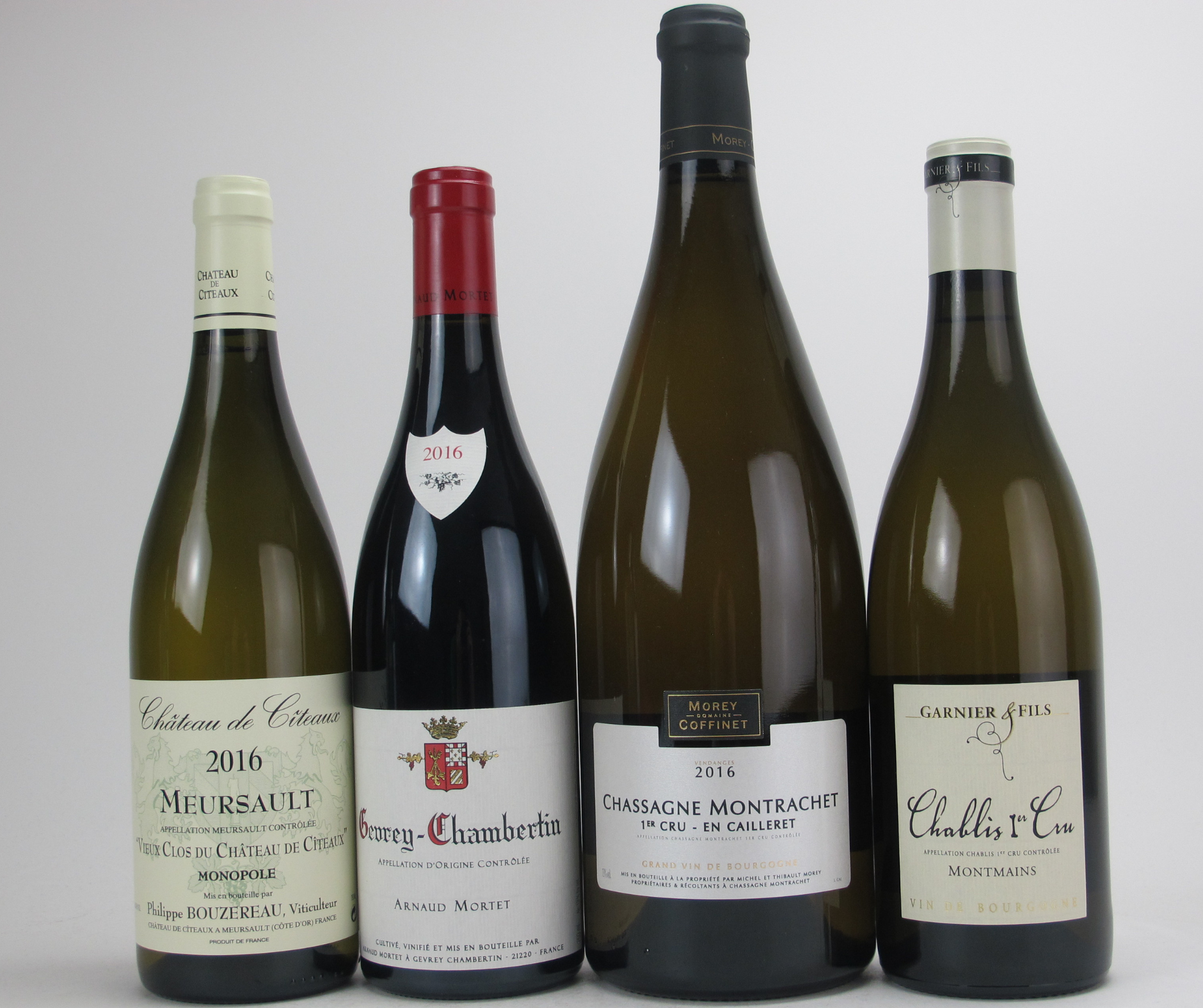
Three Burgundy labels show how the producer, appellation, vineyard, classification, and vintage can appear on a bottle.
Look for a vineyard name
On a village or Premier Cru wine, a name after the appellation may identify a Climat: a precisely defined vineyard site with its own recognized identity. For example, a label might read Chablis Premier Cru Montée de Tonnerre.
That extra name helps distinguish one site from another within the same appellation. In Burgundy, vineyard names are especially valuable to collectors who want to compare how different sites—and different producers working with those sites—express the region.
A label may also include Clos, meaning an enclosed vineyard, or Monopole, which indicates that a single owner holds the vineyard. These words add context, though they don’t replace the appellation or producer name.
Check the vintage and the color
The vintage is the year the grapes were harvested. It can help you understand the wine’s age and provide context for the growing season. When comparing two bottles from the same producer and vineyard, the vintage can be a major point of difference.
You’ll also want to identify whether the wine is red or white. Burgundy is closely associated with Pinot Noir and Chardonnay, but the grape name may not be easy to spot on the front label. Check the back label or the producer’s information if the color or variety isn’t clear. Bourgogne Aligoté, for example, is made from Aligoté rather than Chardonnay.
Don’t mistake the village name for the vineyard
Some Burgundy names can be confusing because they refer to both a village and a vineyard. Puligny-Montrachet, for example, is a village appellation; Montrachet is also the name of a Grand Cru vineyard. The full wording on the label matters.
This is one reason Burgundy labels reward a closer look. Read the producer, appellation, and any vineyard name together instead of relying on one familiar word.
Put the label together
Imagine a label that reads:
Domaine Example — Volnay Premier Cru — Les Caillerets — 2019
Here’s what each part tells you:
- Domaine Example: the producer
- Volnay: the village appellation
- Premier Cru: the classification level
- Les Caillerets: the vineyard site, or Climat
- 2019: the vintage
A Grand Cru label may look different. It might lead with the vineyard name, such as Clos de Vougeot Grand Cru, without a village name in the same format.
A useful starting point for collecting Burgundy
When choosing a bottle, begin with the producer and appellation, then look at the vineyard and vintage. Over time, you may find that you’re drawn to a particular village, Climat, producer, or style.
The label won’t tell you everything about the wine, but it gives you a clear place to begin. Once you can read those details, Burgundy’s many names start to feel less like a code and more like an invitation to explore.
Cheers,
The BWG team
Leave a Reply